

About Campus
Strengthening Quality Publication and Research, UNDIRA Holds Interactive International General Lecture with Universiti Malaysia Sarawak (UNIMAS)


 By :
By : 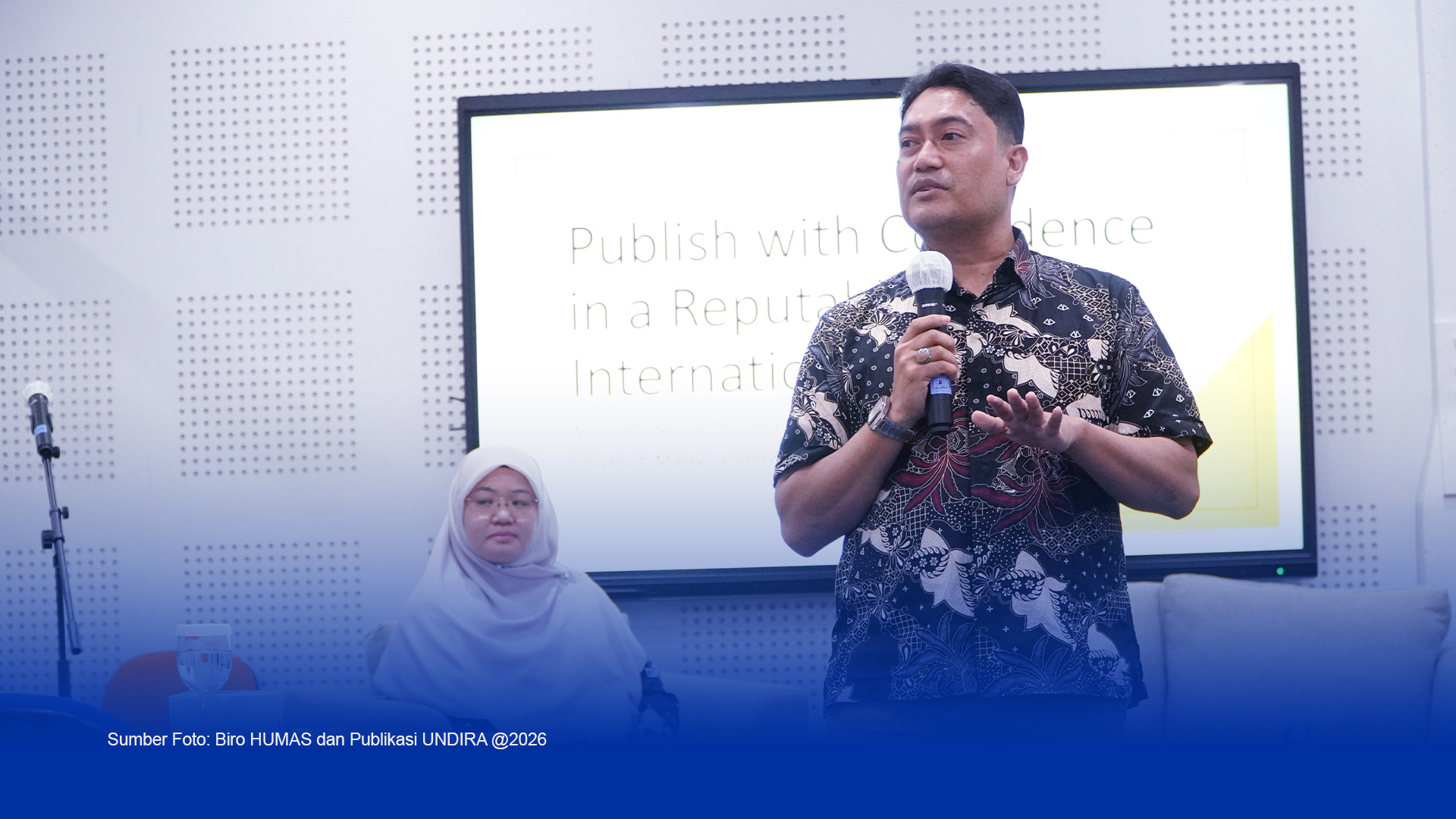
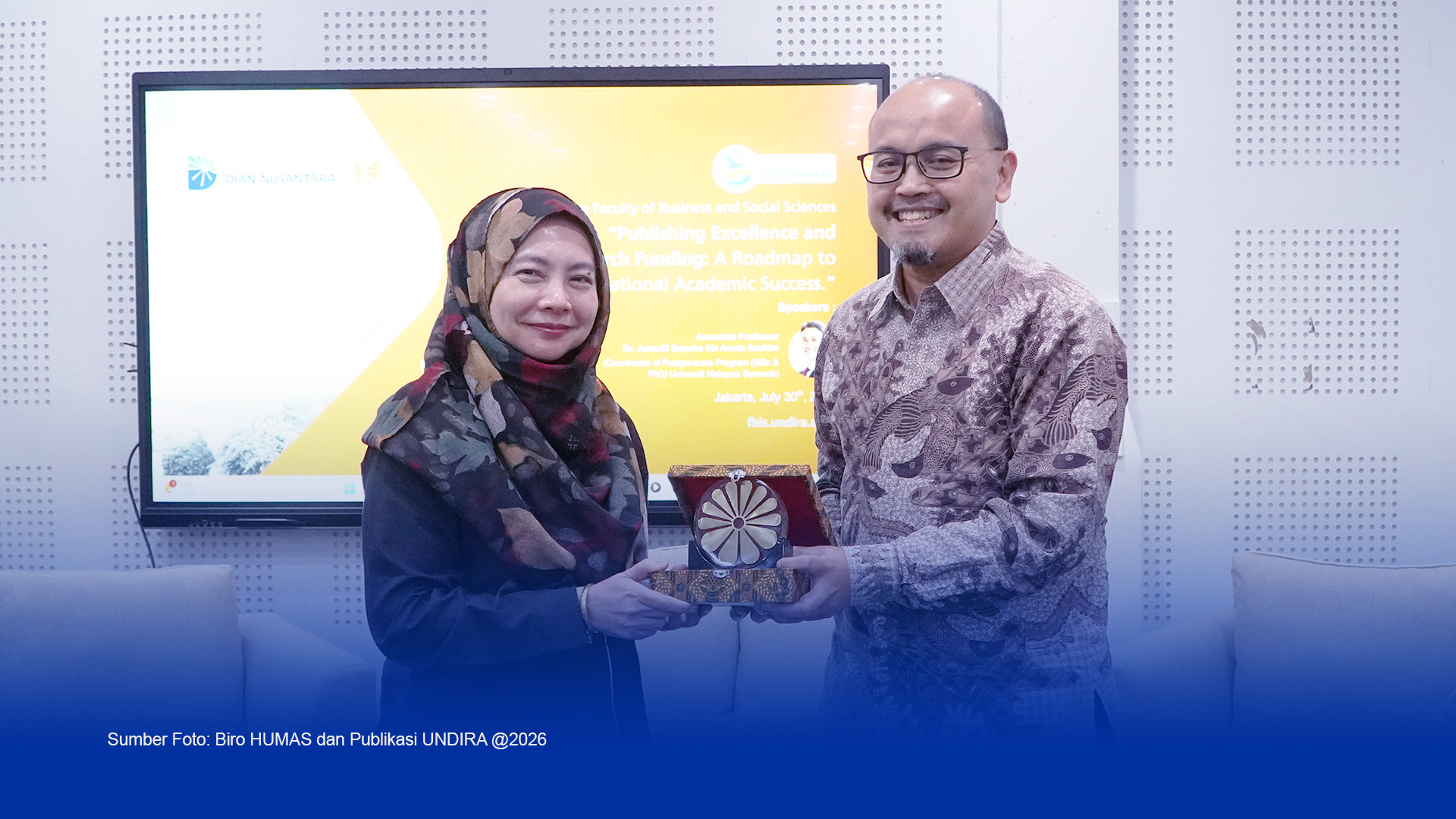
Jakarta, July 31, 2026 — As part of its efforts to develop world-class research and publication capacity, Universitas Dian Nusantara (UNDIRA) held an international general lecture in collaboration with Universiti Malaysia Sarawak (UNIMAS), titled "Publishing Excellence and Global Research Funding – A Roadmap to International Academic Success," on Thursday, July 30, 2026.
The event was held in hybrid format at UNDIRA's Smart Classroom. It drew enthusiastic participation from 60 UNDIRA lecturers attending in person, along with 180 students and lecturers joining online. This edition of the international lecture featured two academic experts from UNIMAS who have published extensively in international Scopus-indexed journals: Assoc. Prof. Dr. Jumadil Saputra bin Aswin Ibrahim, Coordinator of the UNIMAS Postgraduate Program, and Associate Prof. Dr. Rosita binti Hamdan, Deputy Dean of Postgraduate Studies at UNIMAS.
Opening the lecture, UNDIRA's Vice Rector II for Resources, Mr. Dwi Sapto Febriantaka, M.A., expressed his appreciation to everyone who helped make the event possible, and voiced hope that the partnership between UNDIRA and UNIMAS would continue to grow and bring lasting benefits to both institutions — particularly in improving human resource quality and strengthening the global competitiveness of their graduates.
"Today's international lecture is, of course, a tangible outcome of the collaboration between UNDIRA and UNIMAS. We hope it will advance our collective knowledge and insight, while also contributing to the practical application of academic work and improving the welfare of communities across nations," said Mr. Dwi Sapto Febriantaka.
Moving into the session on the essence of writing and research development, Assoc. Prof. Dr. Jumadil Saputra bin Aswin Ibrahim shared that over the course of his career, he has successfully published more than 300 articles in reputable international journals. He emphasized that the true essence of publication lies in sharing knowledge widely, and that every idea for a publication holds value — even those that emerge unexpectedly from everyday phenomena around us.
"There's a saying: some people are great performers but poor writers, and vice versa. That's why, to start writing, we first need to identify a problem. We can draw material from many sources — even a student's undergraduate thesis can be developed further into research material. Another option is to co-publish research with students after refining the structure and content of the writing," he said.
He also noted that while AI can help support the research and publication process, in the interest of maintaining authenticity and credibility, AI should only be used as a tool for generating an overview or summary.
"It would be nonsensical to publish something without first reading at least one or two related articles — we need to connect relevant issues with prior research in order to produce something genuinely new. Beyond that, we simply need to decide on the publication mechanism for our journal through an Article Processing Charge (APC), so that our journal is free of copyright restrictions and accepted in a way that allows it to be seen and cited by many other academics," he continued.
Following on from this, Associate Prof. Dr. Rosita binti Hamdan introduced a framework called "the mechanics of a self-sustaining research culture," built around three interlocking gears: Human Capital (Networks & Mentorship), Capability (Training & Habits), and Environment (Support & Recognition). According to her, none of these three can function in isolation — they must move together for a research culture within an institution to remain sustainable and continue to grow.
She stressed that Human Capital — networks and mentorship — forms the foundation that determines how smoothly research can proceed. "Building strong relationships with partners, whether fellow academics, partner universities, or external parties, isn't just a formality. That's precisely where trust and collaboration are born, making our research far easier to carry out, because we're no longer working in isolation," she said.

She went on to explain that Capability — the habit of writing and practicing consistently — needs to be cultivated as a special habit, while Environment, in the form of institutional support and recognition, involves the role of university administrators as well as employers in fostering a healthy, shared ecosystem and culture of literacy among all parties.
Closing the International General Lecture, UNDIRA and UNIMAS agreed to continue their communication and follow up on the various collaboration opportunities discussed — marking a new chapter in strengthening the research ecosystem and sustainable scientific publication between the two institutions.

Press Contact :
Biro Humas & Sekretariat Universitas Dian Nusantara
Facebook : www.facebook.com/undiraofficial
Instagram : www.instagram.com/undiraofficial
Twitter : www.twitter.com/undiraofficial
www.undira.ac.id
Other
Programming + Creativity = Innovative Creations: The Game Industry and Its Potential for Informatics Engineering Students
Read more
Creative Writing 101: Leveraging Accessible Data for Education and Information
Read more
UNDIRA Holds Webinar Once More to Discuss Successful Strategies for Kedaireka Matching Fund Grant
Read more
Campus Tanjung Duren
Jln. Tanjung Duren Barat II No. 1
Grogol, Jakarta Barat. 11470
Campus Green Ville
JIn. Mangga XIV No. 3
Campus Cibubur
Jln. Rawa Dolar 65
Jatiranggon Kec. Jatisampurna, Bekasi. 17432
Campus Cibubur Kranggan Raya
Jln. Raya Kranggan, No.6, RT 006/ RW 008
Jatiranggon Kec. Jatisampurna, Bekasi. 17432


