

Research and Innovation

UNDIRA Electrical Engineering Students and Lecturer Develop Water Quality Monitoring Technology to Support More Effective Water Management


 By :
By : 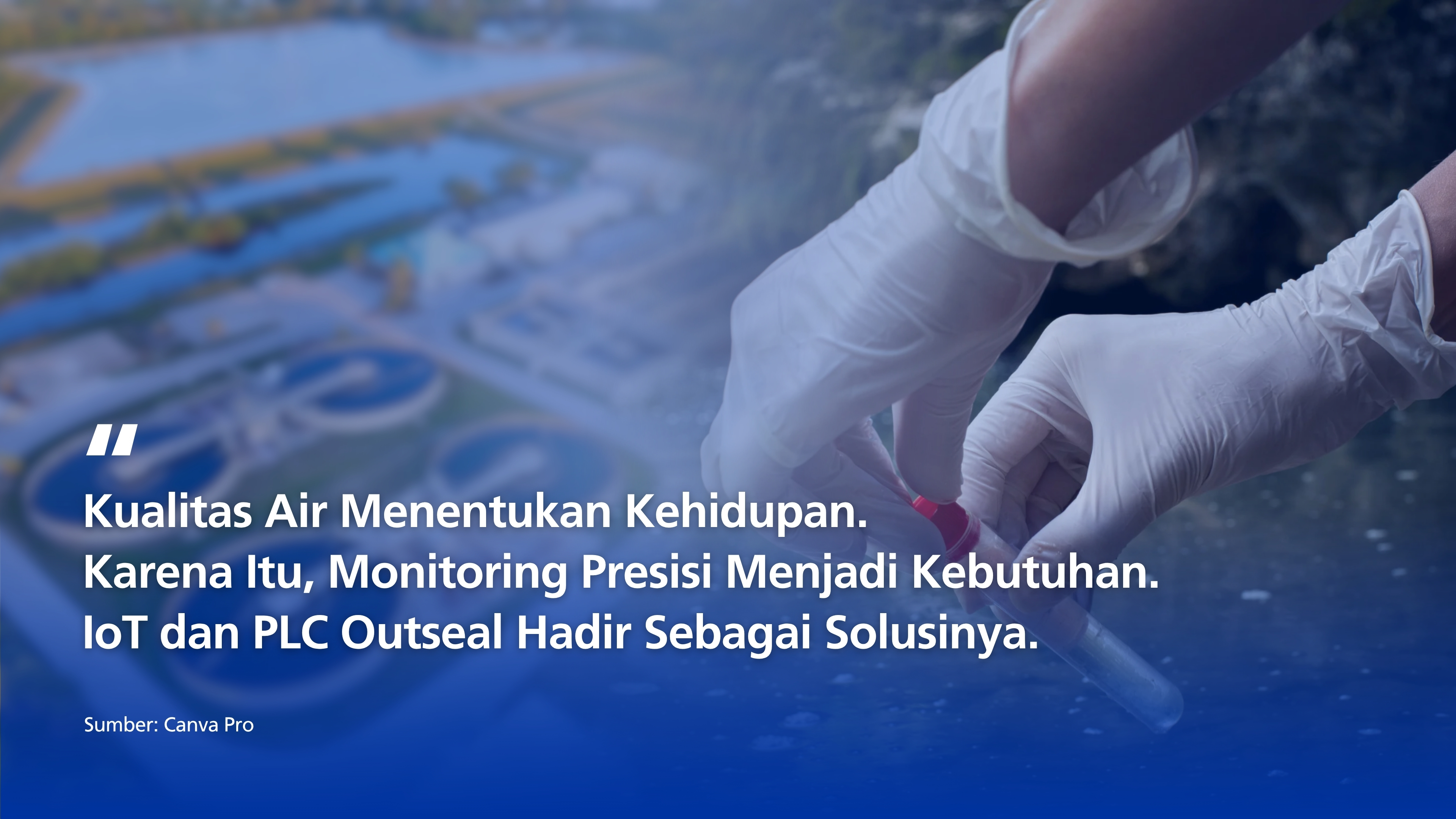
Clean water is a fundamental requirement for sustaining ecosystems and human life. Yet ensuring a reliable supply remains a persistent challenge, particularly in metropolitan areas such as Jakarta, where growing urbanization and pollution continue to place increasing pressure on water resources. Although environmental management agencies have invested heavily in water treatment plants to improve water quality, conventional water testing methods—typically conducted manually at scheduled intervals—are becoming less practical as contamination spreads across wider areas.
One of the most important indicators of water quality is turbidity, which measures the concentration of suspended particles in water. Water is generally considered safe for treatment and consumption when its turbidity remains below 5 NTU (Nephelometric Turbidity Unit). Higher NTU values indicate reduced water clarity and may signal contamination from organic or inorganic industrial waste, as well as the presence of microorganisms that could pose health risks.
In addition to turbidity, water temperature is another critical parameter. Certain microorganisms thrive within specific temperature ranges, making continuous temperature monitoring essential for maintaining water quality and ensuring that water remains safe for use.
As the demand for smarter and more efficient water management continues to grow, Internet of Things (IoT) technology has emerged as a promising solution. By enabling connected devices to communicate and operate seamlessly, IoT streamlines industrial workflows, supports automation, and enables continuous real-time monitoring.
Building upon these capabilities, a collaborative research project from the Electrical Engineering Program at Universitas Dian Nusantara (UNDIRA) led to the development of a water quality monitoring system prototype. The research was carried out by Achmad Irfan Albanjari, an Electrical Engineering student at UNDIRA, under the supervision of Dr. Ir. Erfiana Wahyuningsih, S.T., M.T., a lecturer in the same program.
The study focused on integrating an Outseal PLC (Programmable Logic Controller)—an Arduino-based industrial automation controller—with an ESP32 microcontroller. The Outseal PLC was selected because it serves as a versatile central control unit capable of integrating with both analog and digital sensors while remaining cost-effective, widely accessible, and highly scalable. Its modular architecture also allows future system upgrades without requiring a complete redesign.
To measure water turbidity, the prototype utilizes the SEN0175 turbidity sensor, which incorporates a laser diode to detect suspended particles by emitting a focused laser beam through the water. At the same time, water temperature is monitored using a DS18B20 digital temperature sensor, connected via a one-wire communication interface to ensure stable data transmission with minimal interference.
The collected sensor data is processed by the ESP32 before being transmitted through an RS-485 converter to the Outseal PLC for further processing and mapping. The processed information is then displayed in real time on a Human Machine Interface (HMI), enabling operators to monitor water conditions continuously without conducting frequent field inspections or waiting for laboratory test results. This significantly improves operational efficiency while allowing faster responses whenever water quality changes are detected.

To validate the reliability of the system, Dr. Ir. Erfiana Wahyuningsih and Achmad Irfan Albanjari conducted field testing and calibration using five water samples representing different turbidity levels: clear, slightly turbid, turbid, dirty, and heavily contaminated water. Each sample was measured using the developed prototype and compared against readings obtained from a laboratory-grade turbidity meter and a digital thermometer.
According to Dr. Erfiana Wahyuningsih, the testing produced several noteworthy findings. The turbidity sensor demonstrated strong agreement with the laboratory reference instrument, with measurement differences ranging from approximately 8 to 45 NTU across the test samples. The researchers noted that these deviations may have resulted from calibration inaccuracies or interference from ambient light affecting the optical performance of the SEN0175 sensor—limitations that could be minimized through further refinement of the system.
Meanwhile, the temperature sensor delivered considerably stronger performance, producing stable and consistent readings that closely matched those of the reference digital thermometer. Overall, the prototype demonstrated encouraging potential as a practical solution for continuous water quality monitoring and provides a solid foundation for further development and optimization.
This research represents another meaningful example of collaboration between UNDIRA Electrical Engineering students and faculty in developing practical technological innovations that extend beyond academic research. By combining industrial automation, IoT technology, and embedded systems, the project contributes to smarter water resource management while supporting environmental sustainability efforts in Indonesia's rapidly growing metropolitan regions.
Source of Reference (Journal):
Press Contact :
Biro Humas & Sekretariat Universitas Dian Nusantara
Facebook : www.facebook.com/undiraofficial
Instagram : www.instagram.com/undiraofficial
Twitter : www.twitter.com/undiraofficial
www.undira.ac.id
Other

BEI GI Award 2024, Capital Market Commitment to Build the Future
Read more.jpg)
Get to Know: The Mechanism of Wireless Charging and How It Can Be a 'Silent Killer' for Your Devices
Read more.jpg)
The Influence of Language and Context on Perception and Response in Social Media and Social Interactions
Read more
Campus Tanjung Duren
Jln. Tanjung Duren Barat II No. 1
Grogol, Jakarta Barat. 11470
Campus Green Ville
JIn. Mangga XIV No. 3
Campus Cibubur
Jln. Rawa Dolar 65
Jatiranggon Kec. Jatisampurna, Bekasi. 17432
Campus Cibubur Kranggan Raya
Jln. Raya Kranggan, No.6, RT 006/ RW 008
Jatiranggon Kec. Jatisampurna, Bekasi. 17432


